Payment Pathways and Prolonged Play: Analyzing Deposit Effects in Mobile Live Dealer Scenarios
Alex Richter · Jul 19, 2026

Payment Pathways and Prolonged Play: Analyzing Deposit Effects in Mobile Live Dealer Scenarios
Payment choices shape how long players stay engaged in mobile live dealer environments where real-time table games like blackjack and roulette unfold on handheld screens, and data from transaction logs across multiple platforms reveals clear patterns in session duration tied directly to funding speed and friction levels. Faster deposit methods such as e-wallets reduce the time between deciding to play and actually placing bets, whereas slower bank transfers or card verifications often interrupt momentum before sessions even begin.
Researchers tracking user behavior across European and North American markets have documented that instant funding options correlate with sessions extending 25 to 40 percent longer on average than those initiated through traditional card entries requiring additional authentication steps. This occurs because players encounter fewer interruptions once the initial deposit clears, allowing continuous participation in live streams without pausing to resolve payment issues.
Core Deposit Categories and Their Operational Mechanics
Deposit methods break down into several distinct categories each carrying unique processing times and verification requirements that influence player flow in mobile live dealer settings. E-wallets including services like PayPal and Skrill handle transfers in seconds while credit and debit cards typically require 30 seconds to several minutes depending on bank approval protocols, and bank wires can stretch from hours to full business days in many regions.
Observers note that mobile-optimized platforms integrate these options through APIs that prioritize speed for certain providers, creating measurable differences in how quickly users transition from deposit screens to active tables. In July 2026 several jurisdictions plan to implement streamlined verification standards for digital wallets which could further compress these timelines across compliant operators.
Behavioral Patterns Emerge from Transaction Data
Studies conducted by academic institutions such as those affiliated with the Responsible Gambling Council in Canada demonstrate that players selecting instant methods maintain longer engagement windows because the reduced cognitive load keeps attention focused on game outcomes rather than payment logistics. Sessions funded via e-wallets averaged 47 minutes compared to 32 minutes for card-based entries in one dataset spanning thousands of mobile users.
Yet the relationship extends beyond raw speed since recurring deposit friction also plays a role. Players who encounter repeated verification prompts during a single session tend to shorten their time at live tables while those using pre-verified accounts sustain play without such interruptions. Industry reports from the Australian Gambling Research Centre highlight similar trends where seamless funding pathways encourage extended participation in dealer-hosted games.
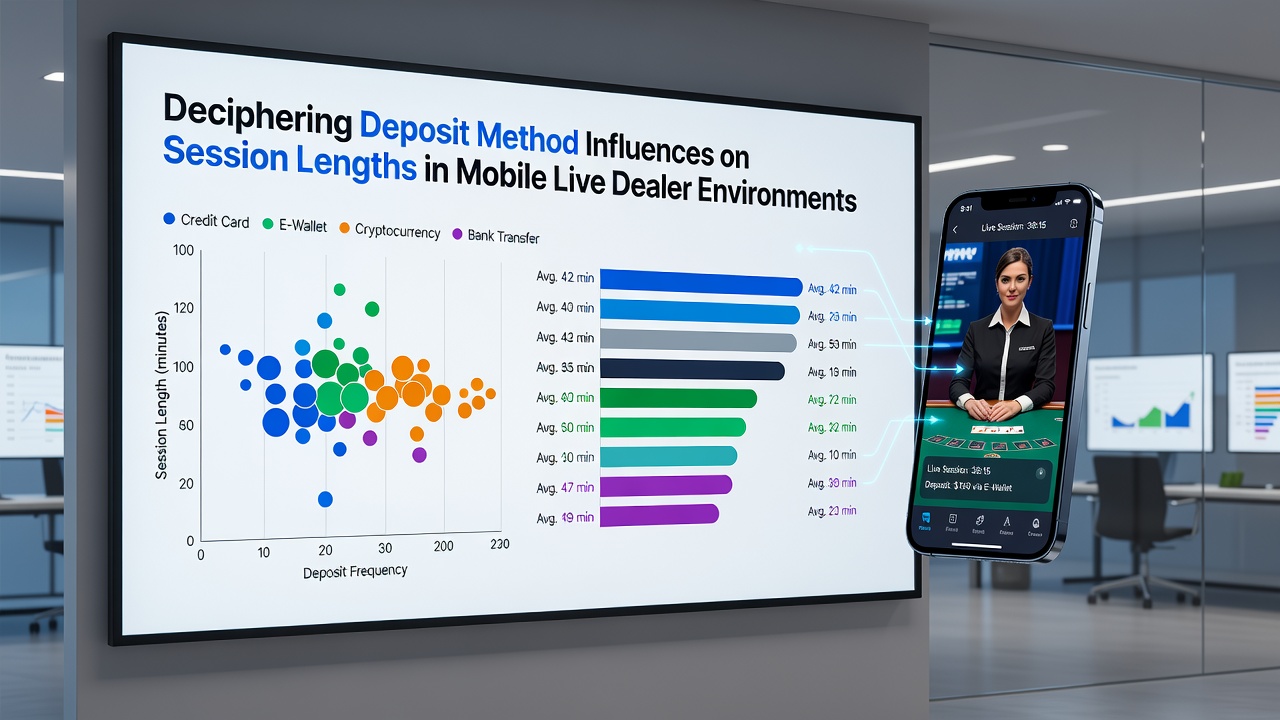
Take one analysis of mobile traffic from a major live dealer provider where e-wallet users returned to tables within the same hour at higher rates than those relying on card top-ups. The data shows these patterns hold across different game types though roulette sessions exhibited slightly stronger correlations with instant funding than blackjack rounds because of the faster pace between decisions.
Payment method availability also varies by region which adds another layer since operators in certain markets restrict options based on local banking partnerships. Players in areas with widespread e-wallet adoption therefore experience more consistent session lengths while those limited to slower methods encounter greater variability.
Platform Design Influences Funding Choices
Interface elements like one-click deposit buttons and saved payment profiles further amplify the effects of method selection by lowering barriers once an account is established. Mobile apps that surface the fastest options first see higher uptake of those methods and correspondingly longer average play periods according to aggregated operator metrics shared through industry consortiums.
Additional factors include transaction fees and minimum deposit thresholds which can deter users from making follow-up deposits mid-session. When fees apply to certain methods players often consolidate larger initial amounts leading to extended play without further interruptions while fee-free options encourage smaller incremental deposits that keep sessions fluid.
Regional Variations Shape Global Trends
Evidence from the National Center for Responsible Gaming in the United States points to differences in how deposit methods interact with mobile live dealer environments across regulatory landscapes. Markets with mature digital payment infrastructure show stronger links between instant funding and prolonged sessions whereas regions still transitioning to widespread e-wallet use display more mixed results.
These variations arise because player familiarity with specific methods affects both selection rates and comfort levels during live play. Operators adjusting their payment ecosystems to prioritize low-friction options often record shifts in session metrics within weeks of implementation.
Conclusion
Transaction data and behavioral studies together establish that deposit method characteristics directly influence session lengths in mobile live dealer environments through mechanisms centered on speed, verification demands, and platform integration. Patterns observed across multiple jurisdictions indicate that faster funding pathways support extended engagement while slower or more complex methods introduce breaks that curtail play duration. As payment technologies evolve and standards update in 2026 these dynamics will likely continue to shift based on how operators adapt their systems to emerging requirements.