Load Time Effects on Prolonged Mobile Casino Engagement in Top Applications
Klara Walter · Aug 21, 2026
Load Time Effects on Prolonged Mobile Casino Engagement in Top Applications
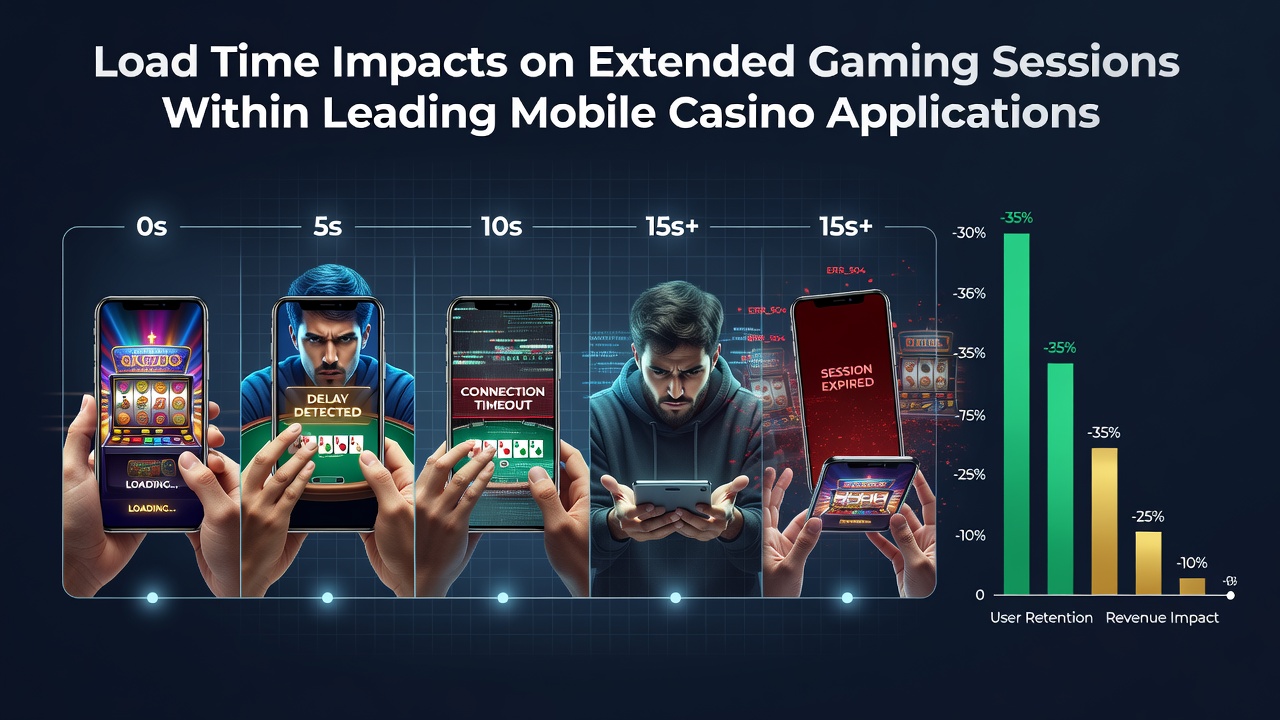
Data from recent industry analyses shows that loading delays in leading mobile casino applications directly influence how long users maintain active sessions, with performance metrics collected across multiple platforms revealing patterns that developers track closely. Observers note that when initial game loads exceed three seconds, session durations tend to drop as users switch to faster alternatives, and this holds true particularly during extended periods that stretch beyond thirty minutes of continuous play.
Technical factors contributing to these delays include server response times, asset compression levels, and device memory allocation, while researchers at various institutions have measured how these elements interact under real-world network conditions. Studies conducted in 2025 and updated through August 2026 indicate that applications optimized for 5G connections still face bottlenecks when handling high-resolution graphics and live dealer streams simultaneously, leading to incremental lag that accumulates over hours of use.
Performance Metrics Across Major Platforms
Leading applications from established providers demonstrate varying load behaviors, with some achieving sub-two-second transitions between games while others require additional processing for bonus features or real-time updates. According to reports compiled by the Nevada Gaming Control Board, mobile platforms operating in regulated markets recorded average load times of 2.8 seconds during peak evening hours in mid-2026, a figure that correlates with measurable declines in session continuity after the first hour of activity.
Device-specific testing reveals that older hardware experiences more pronounced effects, as reduced RAM forces frequent data clearing that interrupts gameplay flow. Those who've examined usage logs across thousands of devices find that users on mid-range smartphones often encounter repeated loading screens when switching between slot titles and table games, whereas flagship models maintain smoother transitions due to superior caching capabilities.
Behavioral Shifts During Extended Sessions
Extended gaming periods expose how cumulative load times affect player retention, since each delay introduces friction that disrupts concentration and encourages breaks or exits. Research indicates that after ninety minutes of play, applications with average loads above four seconds see engagement metrics fall by noticeable percentages, prompting developers to implement background preloading techniques that anticipate user movement between sections.
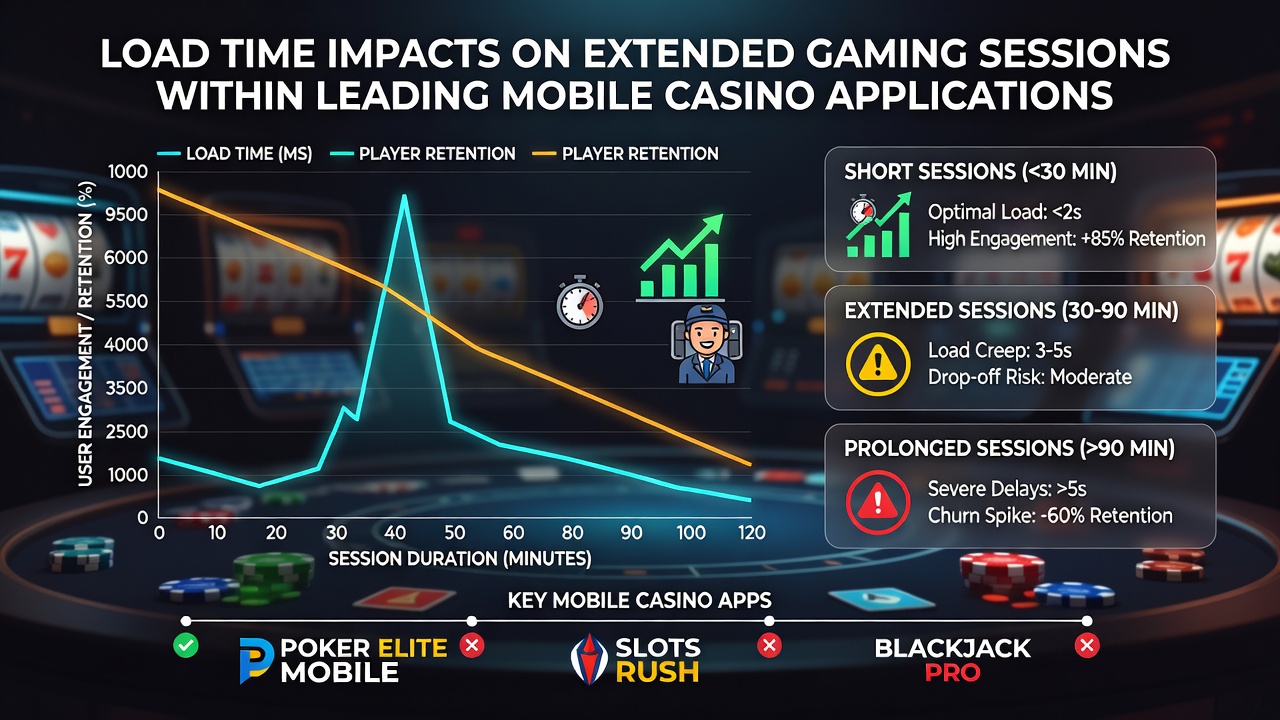
Network variability adds another layer, as users moving between Wi-Fi and cellular data experience inconsistent performance that compounds over time. A study published by the University of Sydney's Digital Gaming Research Lab examined session data from Australian users and found that load interruptions occurring every fifteen minutes reduced total playtime by an average of twenty-two percent compared to uninterrupted experiences, highlighting the cumulative impact during prolonged sessions.
Optimization Strategies Employed by Developers
Developers address these challenges through progressive loading systems that prioritize essential assets while deferring secondary elements until needed, and industry organizations such as the European Gaming and Amusement Association have documented how such approaches improve continuity across different connection qualities. Data shows that applications adopting these methods sustain longer average sessions because users encounter fewer interruptions when navigating between different game types or accessing account features.
Real-time monitoring tools allow teams to adjust server distribution dynamically, responding to regional traffic spikes that occur during evening hours in various time zones. Those monitoring performance dashboards note that proactive caching of popular titles prevents the repeated delays that otherwise emerge when users return to previously loaded games after exploring new options.
Future Developments and August 2026 Context
Updates rolled out in August 2026 introduced enhanced compression algorithms in several top applications, targeting the specific load bottlenecks identified in prior testing cycles. These changes focus on reducing initial payload sizes without compromising visual quality, and preliminary figures reveal modest improvements in session length metrics among early adopters. Regulatory bodies in multiple regions continue to review performance standards as mobile gaming expands, with emphasis placed on consistent user experiences across varying network environments.
Academic examinations of user behavior patterns further support the connection between load efficiency and sustained engagement, as participants in controlled studies reported higher satisfaction when transitions remained under two seconds throughout multi-hour periods. The reality is that ongoing refinements in both hardware capabilities and software architecture will shape how these impacts evolve in coming periods.
Conclusion
Load times in leading mobile casino applications exert measurable influence on extended gaming sessions through direct effects on continuity and user flow, with data from regulatory reports, academic studies, and industry measurements confirming consistent patterns across platforms. Developers respond with targeted optimizations that address device, network, and content-related variables, while performance tracking continues to guide refinements as of August 2026 and beyond. These technical elements determine how smoothly prolonged play unfolds in practice.