Approval Schedules Reshaping Live Dealer Releases Across Certified Mobile Platforms
Erik Albrecht · Jul 31, 2026

Approval Schedules Reshaping Live Dealer Releases Across Certified Mobile Platforms
Regulatory approval schedules have begun dictating the pace at which live dealer games reach certified mobile hubs, and operators now coordinate launches around specific notification windows rather than market demand alone. Data from multiple jurisdictions shows that certification cycles have lengthened by an average of 45 days compared with figures recorded in 2023, forcing studios and platforms to adjust production calendars accordingly.
Certified mobile hubs operate under layered compliance requirements that include technical audits, responsible gambling feature checks, and jurisdiction-specific localization rules. These layers create sequential gates that each live game must clear before deployment, and the cumulative effect has shifted rollout windows from quarterly to semi-annual patterns in several regions.
Certification Gates and Their Cumulative Effects
Observers note that initial game submissions now trigger parallel reviews covering RNG integrity, live stream latency standards, and mobile interface accessibility. When one gate identifies issues, subsequent stages pause automatically, and this cascading structure extends overall timelines. Research from the European Gaming and Betting Association indicates that 68 percent of live dealer titles submitted in the first half of 2025 required at least one resubmission, adding between 30 and 60 days to the process.
Hub operators have responded by embedding compliance teams earlier in the development cycle. Studios now supply detailed documentation alongside beta builds, which allows regulators to begin preliminary assessments while final assets are still being polished. This front-loading approach has reduced late-stage rejections, yet it has also increased upfront costs that smaller providers must absorb before revenue begins.
Mobile-Specific Constraints in Live Gaming
Live dealer products face additional scrutiny on mobile because of variable network conditions and device fragmentation. Regulators require demonstrated performance across multiple operating systems and screen sizes, and test environments must replicate peak-hour traffic loads. These requirements have prompted hubs to maintain dedicated certification sandboxes that mirror production conditions, allowing developers to identify latency or UI problems before formal submission.
One major platform reported that mobile-only certification now accounts for 55 percent of total approval time, up from 35 percent two years earlier. The increase stems from expanded accessibility audits and new rules governing touch-based betting interfaces. Studios have adapted by creating modular game engines that can swap regional compliance modules without full recertification, though core mechanics still undergo complete review each time.
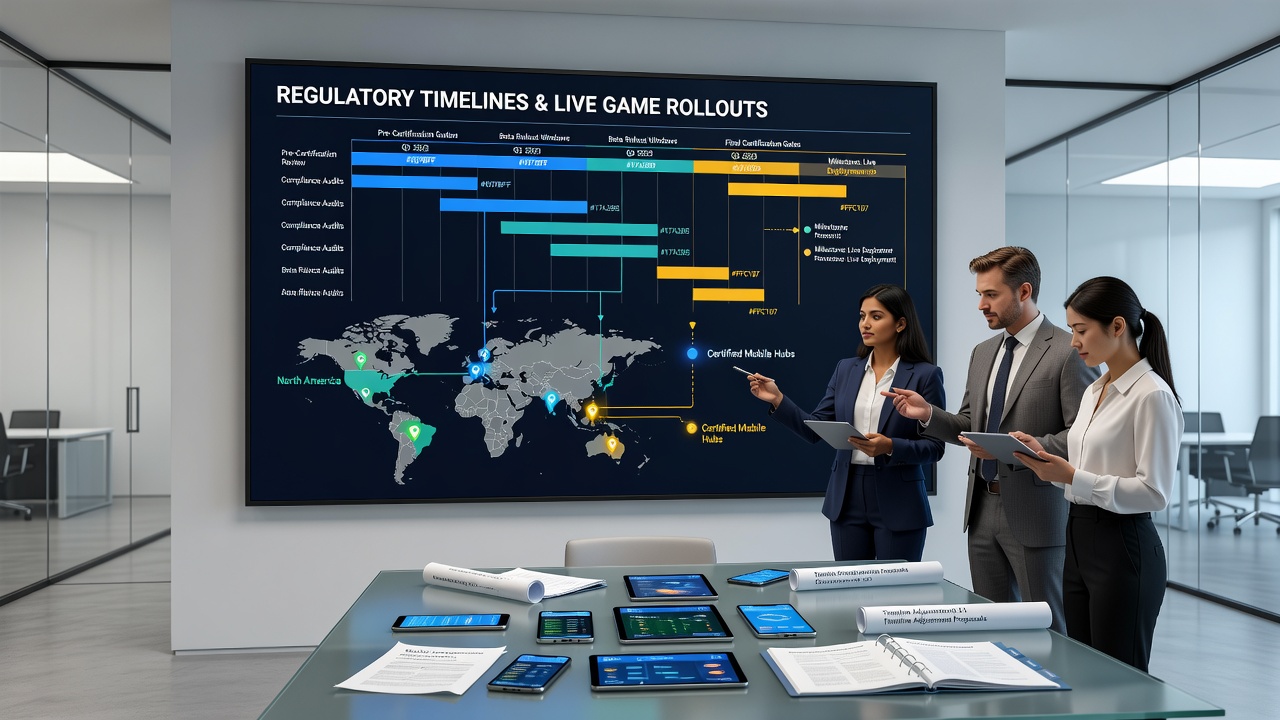
July 2026 Deadlines and Regional Divergence
July 2026 marks the enforcement date for updated technical standards in several non-UK markets, including revised stream encryption requirements and mandatory real-time monitoring dashboards. Operators in those jurisdictions have accelerated testing schedules to meet the deadline, and some have deferred new live game introductions until after the transition period concludes. This creates a temporary slowdown in content variety during the second half of 2026.
Meanwhile, other regions have adopted staggered implementation models that allow phased rollouts. Platforms operating across multiple hubs therefore maintain separate release tracks, and synchronization between tracks has become a key operational challenge. Industry reports from iGaming Ontario highlight that cross-jurisdictional operators now allocate 20 percent of project management resources solely to timeline coordination.
Case Examples from Certified Hubs
Take one European hub that integrated a new live roulette variant in early 2025. The title cleared initial technical review in 22 days but spent an additional 48 days addressing mobile-specific accessibility adjustments before final approval. The extended cycle delayed the planned marketing campaign and required renegotiation of studio revenue shares.
Another example involves a North American certified platform that used parallel submissions to two jurisdictions. Although both regulators applied similar standards, differing documentation formats created administrative overhead that extended the combined timeline by 35 days. The operator subsequently developed a unified documentation template to streamline future submissions.
Conclusion
Approval timelines continue to influence when and how live dealer games appear in certified mobile hubs. Studios and operators have adjusted internal processes to accommodate sequential reviews, and the July 2026 enforcement dates in multiple regions will likely reinforce these patterns. Data from regulatory bodies and industry associations shows measurable shifts in release cadence, and those shifts are expected to persist as technical and accessibility requirements evolve.